
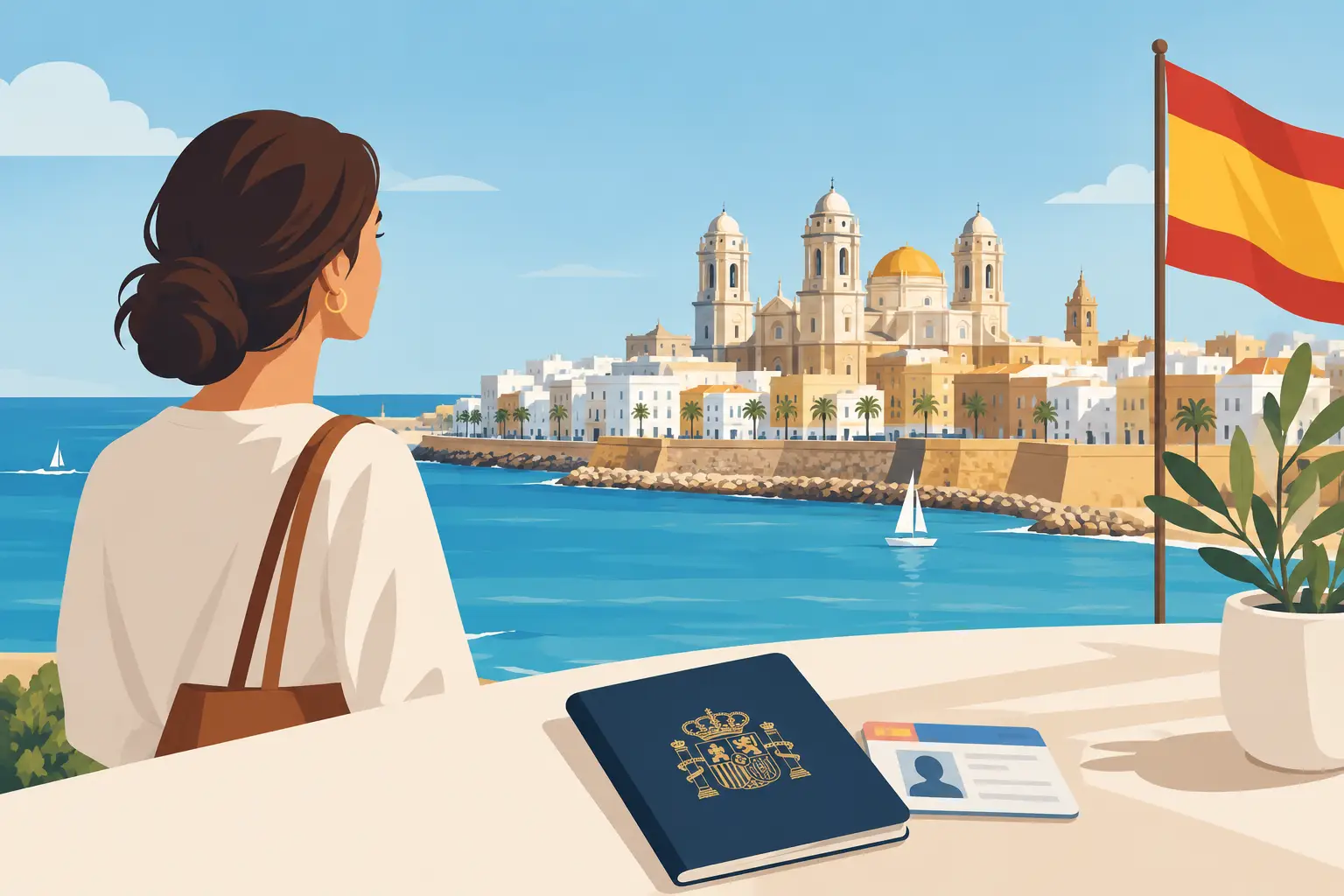
A home near the fairways at San Andres Golf, regular beach days at La Barrosa or Roche, and a more permanent base in Cádiz all sound straightforward. The legal route is less casual. Knowing how to obtain Spanish residency starts with choosing a visa that matches how you will actually live, work and spend your time in Spain.
For British nationals, the familiar 90 days in every 180-day period under the Schengen visitor rules is not residency. It can suit occasional holidays and property-viewing trips, but it is not a solution for spending a whole winter in Chiclana, working remotely from a rental, or moving into a purchased home year-round. Non-EU nationals need to arrange the appropriate immigration permission.
Start with the residency route that fits your life
Spain has several routes to legal residence. The right one depends on your income, work arrangements, family position and whether your main home will be in Spain. Choosing on the basis of the easiest-looking application can create difficulties later, particularly where work, tax residence or renewals are concerned.
Non-lucrative residence visa
The non-lucrative visa is often considered by retirees, people with investment income, and buyers who do not intend to work in Spain. It normally requires evidence of sufficient financial means, comprehensive private health insurance from an authorised Spanish provider, and a clean criminal-record certificate.
It does not permit work in Spain, including self-employment. For someone planning to manage a UK business actively while living near Novo Sancti Petri, or to work remotely for an overseas employer, this is usually not the right route. Financial thresholds are tied to official indicators and can change, so confirm the current requirement with the Spanish Consulate before preparing an application.
Digital nomad visa
Spain’s digital nomad route may suit remote workers whose employment or professional activity is mainly for companies and clients outside Spain. There are rules around qualifications or professional experience, minimum income, social-security coverage and the proportion of work carried out for Spanish clients.
This can be a practical option for a couple who want to rent first, test daily life around Chiclana de la Frontera and Conil, and retain overseas employment. It needs careful preparation, though. Employment contracts, company documents, proof of trading history and social-security arrangements must be consistent with the application.
Work, self-employment and highly qualified routes
If you have a Spanish job offer, are transferring within a company, or intend to establish a genuine business in Cádiz province, a work-based route may apply. These categories have their own employer, business-plan, qualification and approval requirements.
They are not interchangeable with a property purchase. Buying a villa, townhouse or flat provides an address and may make relocation more appealing, but it does not by itself give a right to live in Spain. Spain’s property-linked golden visa scheme ended for new applications in 2025, so purchasers should take advice based on another viable residence route.
Family-based residence and EU routes
Family members of Spanish or other EU citizens may have a different and often more direct path. The details depend on nationality, relationship, financial dependence and where the EU citizen is exercising their rights.
EU, EEA and Swiss citizens generally do not need a visa to move to Spain, but they must register if staying for more than three months and show that they work, are self-employed, study with suitable cover, or have adequate resources and health insurance. Their non-EU family members may need a residence card.
How to obtain Spanish residency: prepare before you travel
Most first-time non-lucrative applications are made through the Spanish Consulate responsible for your place of legal residence, before moving to Spain. Some other routes can be initiated from Spain, but do not assume this applies simply because you are in the country as a visitor. The location and timing of the application are part of the rules.
Document preparation is where many otherwise strong applications lose time. Expect to provide a valid passport, completed forms, recent photographs, proof of funds or income, medical cover where required, and a criminal-record certificate covering relevant countries of residence. Marriage and birth certificates may also be needed for family applications.
UK public documents commonly need an apostille and an official Spanish translation by a sworn translator. Check the required validity period before ordering certificates. A criminal-record certificate obtained too early, for example, may no longer be accepted when your appointment takes place.
Keep a clear paper and digital file for every applicant. Names, dates, addresses and employer details should match across bank statements, applications, insurance policies and translations. If a surname has changed following marriage, include the document that explains the difference rather than leaving the caseworker to guess.
After approval: the first practical steps in Cádiz
Once the visa is granted and you arrive in Spain, there are further formalities. Depending on your route, these normally include arranging the TIE, the biometric foreigner identity card, at a designated Policía Nacional office. Appointments can be limited at busy times, so prepare the required forms, fee receipt, photographs, passport and approval documents in advance.
You will also need a Spanish address that you can evidence. Long-term tenants should make sure the rental contract permits registration and is signed correctly. Buyers should retain their deed and supporting property documents. At San Andres Golf, this may mean confirming whether the property sits within Chiclana’s municipal area and ensuring that the address is written consistently on contracts, utility paperwork and applications.
Registering on the padrón at the local town hall is separate from immigration residency, but it is an important proof of local address and is often needed for practical services. It can help with healthcare administration, school applications and local procedures. Requirements vary by council and by the documents available to tenants, owners and families.
A Spanish bank account, local mobile number and private health policy can also make administration easier. They are not a substitute for legal residence, but they reduce friction when setting up utilities, paying community charges or arranging services for a home that is occupied throughout the year.
Understand tax residence before deciding how long to stay
Immigration residence and tax residence are related, but they are not the same thing. A person may become tax resident in Spain by spending more than 183 days in the calendar year there, or where Spain is considered the centre of their economic interests. Family circumstances can also matter.
This is particularly relevant to people who begin with a long winter rental near La Barrosa and gradually extend their stays. UK pensions, rental income, company dividends, investments and property holdings may all need to be declared or considered under Spanish tax rules. Obtain advice from a cross-border tax professional before the move, rather than trying to reconstruct the position after the first tax year.
Plan for renewal, not just arrival
Initial permits are commonly temporary. Renewal applications have deadlines and can require evidence that you still meet the original conditions, including financial resources, health cover, work status and time spent in Spain. Keep copies of padron certificates, tax filings, insurance renewals, travel records and TIE cards throughout your residence.
After five years of lawful, continuous residence, many non-EU residents may qualify for long-term residence, subject to the applicable conditions and permitted absences. Spanish nationality is a separate process and, for most British applicants, ordinarily requires a longer period of legal residence. Do not base a relocation plan on an assumed passport timetable.
For families considering a permanent move, it is sensible to rent locally before buying if possible. A season spent learning the drive between San Andres Golf, Chiclana town centre, the beaches at Roche and the facilities around Novo Sancti Petri gives a far clearer picture of daily life than a short viewing trip. San Andres Golf can be a useful base for that transition: close enough to the coast and golf facilities, while still connected to the practical services needed for year-round living.
The strongest applications are usually the least improvised. Choose the route that reflects your real plans, prepare every document carefully, and get regulated immigration and tax advice before committing to travel dates, a tenancy or a purchase.